


Leaflet drops are one of the fastest ways to get your business seen locally.
But in the UK, you can’t just print and start handing them out. Distribute in the wrong place or in the wrong way, and you could be facing fines of up to £2,500.
This guide breaks down leaflet dropping rules clearly, so you know exactly where you can distribute, where you need permission, and how to avoid costly mistakes. If you’re investing in print, this is how you make sure it actually works for you.
The Environmental Protection Act 1990
Leaflet distribution law in the UK is largely based on the Environmental Protection Act 1990. The key term is “free printed matter,” which includes any flyers, leaflets or promotional materials handed out in public.
Why leaflet distribution is regulated
The issue isn’t advertising, it’s litter.
If leaflets end up on the ground, councils are responsible for cleaning them up. That’s why many local authorities control where distribution can happen.
When you need a permit
You will usually need a permit if you are distributing leaflets in public areas such as:
- High streets
- Shopping districts
- Busy pedestrian zones
- Transport hubs
Many councils operate “designated areas” where permits are mandatory. These are typically high-footfall locations where litter risk is higher.
When you don’t need a permit
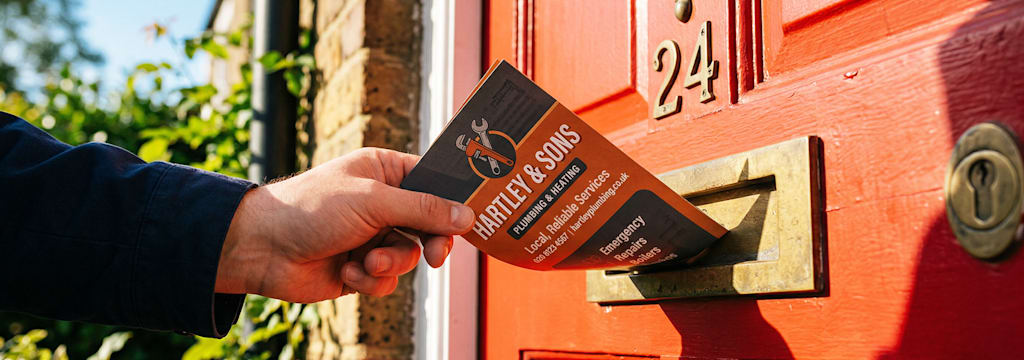
Posting leaflets through letterboxes is generally allowed without a licence.
Because the material is delivered directly to a property, it is not considered public litter. This makes door-to-door leaflet drops one of the most reliable and low-risk distribution methods.
Hand-to-hand distribution rules
Hand-to-hand leaflet distribution is the most regulated approach and requires the most care.

Applying for a council permit
Most councils require:
- An application submitted in advance
- A distribution fee
- Approval before activity begins
Distributors are often required to wear visible identification badges while working.
The 25-metre responsibility rule
If you are handing out leaflets, you are responsible for any of your materials that end up on the ground within a 25-metre radius.
Even if someone else drops it, enforcement can still fall back on the distributor or business.
Activities that lead to fines
Avoid these completely:
- Placing flyers on car windscreens
- Attaching leaflets to lampposts, bins or street signs
- Leaving stacks of flyers in public spaces
These are treated as littering or fly-posting and are actively enforced by councils.
Door-to-door leaflet distribution rules
For most small businesses, this is the safest and most scalable approach.
Why it’s usually permitted
Delivering leaflets through letterboxes is not classed as littering in a public space, so it typically does not require a permit.
Respecting “no junk mail” signage
Ignoring these signs can lead to complaints and damage your reputation locally.
Even where not strictly enforced by law, it’s best practice to treat these properties as excluded.
Why this method performs better
Door-to-door distribution:
- Reaches people in their own space
- Avoids permit requirements in most cases
- Reduces wasted print compared to street drops
It’s often the most efficient way to turn printed leaflets into actual responses.
The “phygital” twist
Leaflet distribution is evolving, but the rules still apply.

QR codes and data protection
If your leaflet includes a QR code that collects data, you must follow UK data protection laws.
This includes:
- Clear consent for data collection
- Transparency on how data is used
- No misleading promotions
Drone-based leaflet distribution
Using drones to distribute leaflets is highly restricted under Civil Aviation Authority rules.
Operators must be registered, qualified and compliant with strict safety guidelines. For most businesses, this is not a practical or scalable option.
Penalties and enforcement
This is where leaflet distribution law has real financial impact.
Typical penalties
- Minor breaches can result in fixed penalties between £80 and £150
- Serious or repeated offences can lead to fines of up to £2,500
Who gets fined
Both the distributor and the business being advertised can be held responsible.
Hiring a third party does not remove your liability.
Compliance checklist
Before starting your leaflet drop, check the following:
- Use the GOV.UK tool to find your local council
- Confirm if your area requires a permit
- Avoid designated zones without approval
- Include a “Please dispose of responsibly” message on your leaflet
- Ensure you have public liability insurance if required
This step protects both your campaign and your budget.
Make your leaflet drop work the best way for you
Following the rules protects you. The way your leaflet is designed determines whether it performs.
Clear messaging, strong layout and high-quality print all affect whether your leaflet gets read or ignored. If you’re investing in distribution, the format and finish should support that effort.
FAQs
Do I need permission to deliver leaflets in the UK?
You need permission for hand-to-hand distribution in many public areas. Door-to-door leaflet delivery usually does not require a licence.
What is the penalty for illegal leaflet dropping?
Fines typically range from £80 to £150 for minor offences, but can reach up to £2,500 for serious or repeated breaches.
Can I put leaflets on car windscreens?
No. This is usually considered littering and can lead to fines.
Are leaflet drops through letterboxes legal?
Yes. Door-to-door leaflet distribution is generally permitted as it is not classed as public littering.
How do I know if my area is restricted?
Check your local council website. Many provide maps of designated areas where permits are required.
Do I need insurance for leaflet distribution?
Some councils require public liability insurance as part of the permit process for street distribution.
Can I ignore “no junk mail” signs?
It’s not recommended. Ignoring them can lead to complaints and damage your local reputation.
Is leaflet distribution still effective in 2026?
Yes. When targeted properly and combined with strong design, leaflet drops remain one of the most direct ways to reach local customers.


