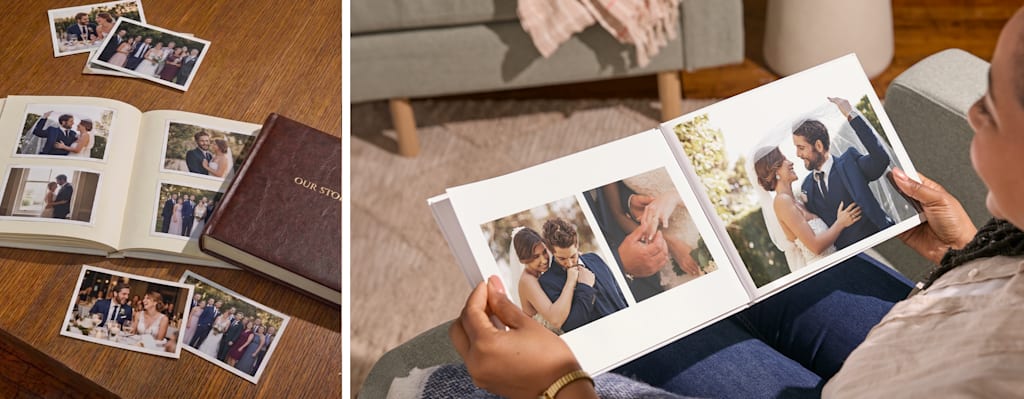
Remember rummaging through old shoeboxes looking for that dog-eared photo of your haphazardly chopped-off fringe at age five? Or flipping through a plastic-pocket photo album, the “sleek” successor of the humble shoebox? The memories!
But a new player has since entered the picture. Practical and polished, printed photo books are steadily gaining ground in the UK thanks to their convenience and modern design. Tech-savvy generations love the speed and the endless creative freedom online tools provide, but does this really mean the end of the traditional photo album?
Let’s take a closer look at how photo books and photo albums compare and how each fits in our modern, digital world.
Traditional photo albums vs. photo books: what’s the difference?
Photo albums hold individually printed photos and typically include plastic sleeves, adhesive pages or corner mounts to keep them in place. They are flexible and allow you to update, rearrange or add images over time, making them ideal for ongoing collections or keepsakes that evolve.
Photo books are professionally printed books where your photos are digitally arranged and printed directly onto the pages. They’re created using online tools and printed with fixed layouts, often including text, backgrounds and other design elements. They offer a polished, cohesive look and are commonly used for special occasions or more curated storytelling.
So, photo books or photo albums, what’s the best option for you? Let’s take a closer look and help you decide:
| Characteristic | Photo Albums | Photo Books |
| Customisation | Fixed layouts in slip-in models, with more creative freedom in adhesive styles. | Fully customisable layouts and templates, with option to add text and decorative design elements. |
Storage space | Typically thick and heavy due to physically inserted photos. | Sleeker and thinner, as the photos are printed directly onto the pages. |
Time to create | Adding photos individually may be time-consuming, depending on album size. | Pre-made templates and automated tools make them quick to make. Customisation can take more time, depending on how tech-savvy you are. |
Durability | Quite resistant if handled with care, but more vulnerable to gradual wear and tear. Adhesives and non-archival materials can cause yellowing or deterioration, but individual photos can be replaced if they fade, bend or get damaged. | High-quality printing and paper can resist fading for many years. Generally more robust for frequent browsing, but less flexible if damage occurs. |
| Cost-effectiveness | More cost-effective for ongoing, flexible collections, but can become more expensive over time if you’re printing lots of photos. | More cost-effective for one-off, curated projects, with printing and binding included in a single upfront cost. Mid-range options tend to offer the best value for money. |
Choose if | • You want to be able to swap photos in and out. • You enjoy scrapbooking. • You don’t feel comfortable using online, digital tools. • You want to be able to add other mementos, like concert stubs, wedding invites, etc. | • You want to save storage space. • You want a sleek, professionally bound book. • You want access to countless creative and customisation options. • You’re looking for a special, meaningful gift. • You want to make multiple prints for various family members. |
In short, photo albums are better for flexible, evolving collections, while photo books are ideal for polished, ready-made keepsakes.
Four reasons photo books are growing in popularity in the UK
According to a 2024 global market report, the sales of photo books will continue to go up over the next 8 years, largely thanks to growing personalisation trends and the ease of creating and ordering photo books online and through mobile apps. Photo books play a similar role for today’s tech-savvy consumers as photo albums did for previous generations.
Here are 4 reasons why photo books are starting to replace photo albums in the UK.
1
Total creative control
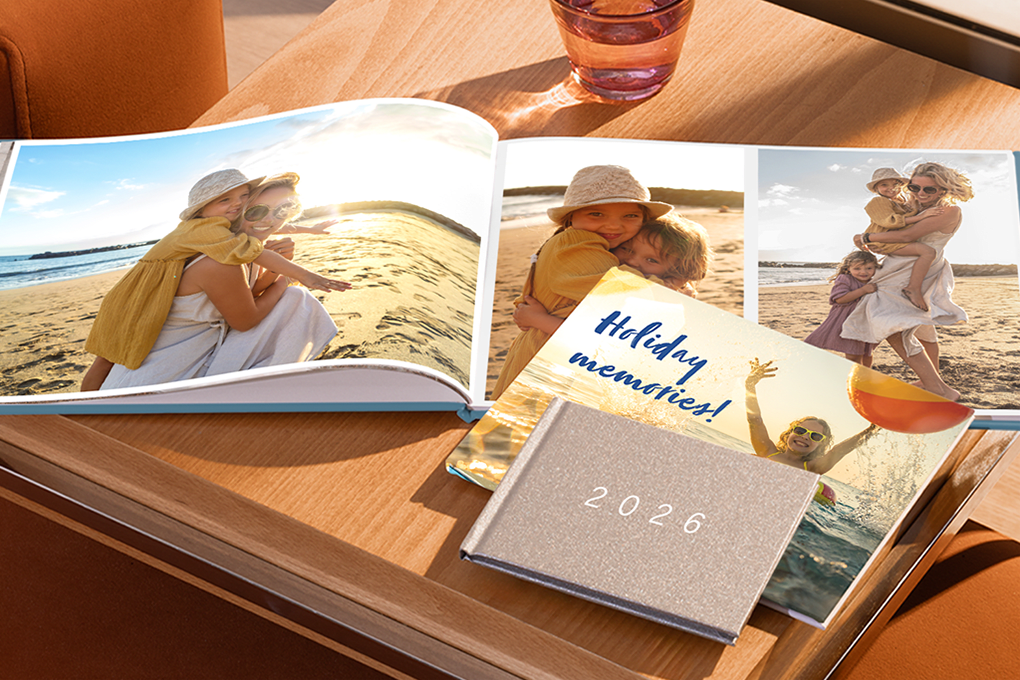
Unlike traditional slip-in photo albums with uniformly cut photo holders, photo books let you create almost any layout or composition in a way that’s quick and convenient. Different photo sizes and crops, opportunity to add text, additional design elements like backgrounds, textures, frames and stickers…your creative opportunities are almost endless, all at the click of a button.
It delivers the creative satisfaction of scrapbooking, with the speed and convenience of a digital tool. For example, you can easily go back and fix designs you’re not entirely happy with, but the process and the final result are just as fun and creative.
2
Saves space in smaller modern homes
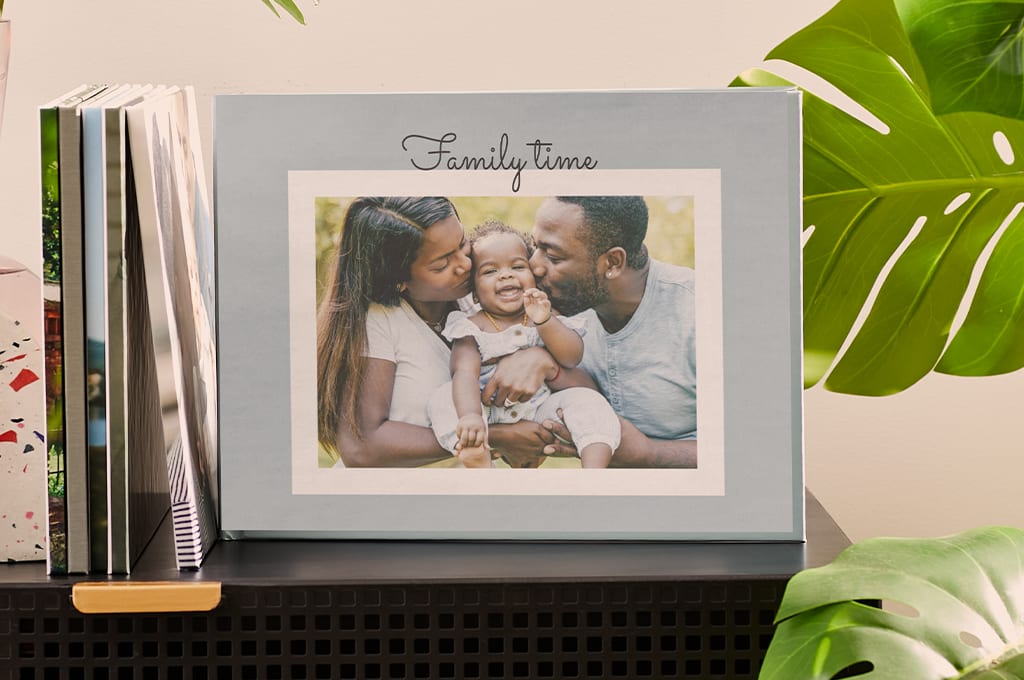
Another reason for the rising popularity of photo books in the UK is that they generally take up less space. Traditional albums quickly bulk up from the printed photos they hold and they’re often offered in odd sizes – either too big or too small.
Photo books are typically thinner, and when printed in standard book sizes they neatly fit any shelf. It’s a real advantage when you live in a small city flat or have a big family that takes up lots of space (and creates lots of photo memories to store!).
3
Better suited to smartphone photography
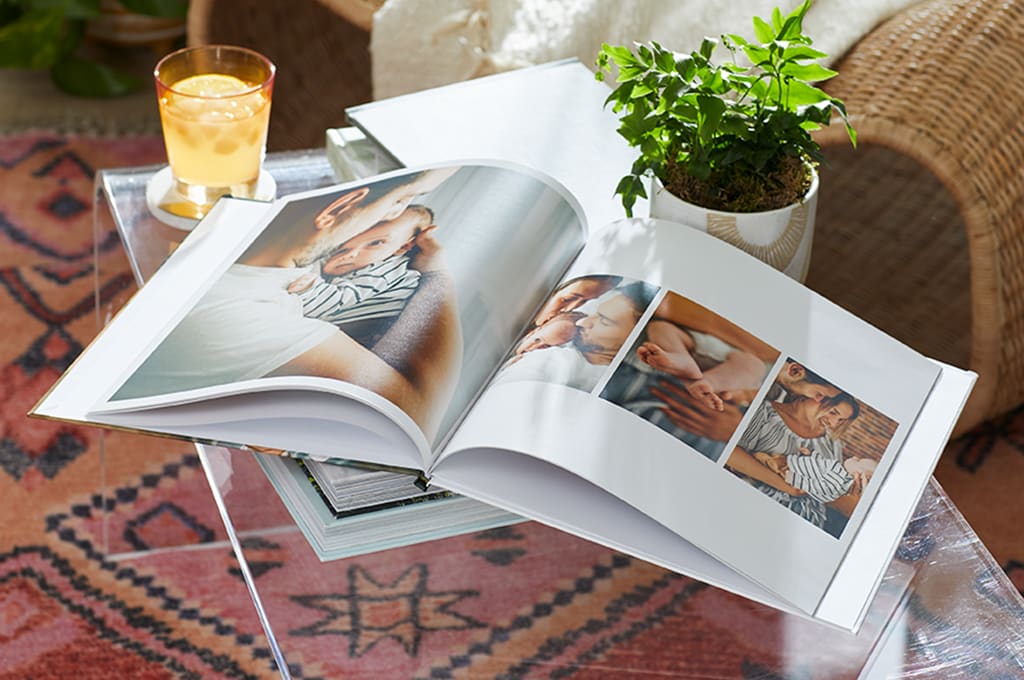
At the same time, photo books can hold more photos than albums do thanks to the freedom to crop, resize and create intricate collages. This is a big plus in a world where we take hundreds of photos every month – too many to be printed and manually inserted into photo albums. Lots of online platforms let you upload photos directly from your phone, which makes the whole process even faster and simpler.

4
Great for gifting
Both photo books and photo albums make thoughtful, personalised gifts. And while traditional albums have the undeniable handmade charm, the professional finish of a photo book makes it stand out as a more polished and intentional gift. But where photo books truly outshine traditional albums is the ability to easily print multiple copies for different family members – like a new baby book for each set of grandparents, for example.
Are traditional photo albums obsolete?
Despite the ever-growing popularity of photo books, traditional albums don’t seem to be going anywhere just yet. They may be less visually polished, but flipping through pockets has its own familiar charm. We associate albums with candid, everyday memories, and their nostalgic, “grandma’s place” feel offers a welcome respite from all things digital. The fact that they require no technology whatsoever makes them a great option for people who are not as tech-savvy. They’re also ideal for saving polaroids or vintage prints, which would lose some of their authenticity if digitised.
So it’s not so much a question of photo albums vs. photo books, but rather when to choose each. After all, we’re still getting our photos printed, which is the most important part.
How to create your first photo book
Making a custom photo book is a fun creative project that’s simple to execute if you follow these three steps:
Prepare
- Make your photo book feel intentional – what do you want it to be about? Pick a theme: year in review, family holiday, special event like a wedding or a milestone birthday. You need to know what story you want to tell before you get down to work.
- Then pick the photos you want to include. Aim for variety: wider shots that set the scene, details that capture the mood, people photos that define the “plot”…they all help make a cohesive and visually engaging story.
- And lastly, decide where you’re going to make and print your photo book. Online platforms like VistaPrint are a popular choice thanks to easy-to-use design tools and a wide range of print formats and finishes.
To avoid turning it into a one-time daunting task, set aside time every couple of months to go through any recently taken photos and select the ones you’d like to get printed.
Design
- Start with picking a size and orientation for your photo book – vertical A4, horizontal and panoramic, small and square…there are options for every taste (and every shelf).
- Browse pre-made templates and themes, knowing you can always customise them as you go.
- Then upload the photos and fill the pages. Many platforms offer an automated way of populating the book with your photos – quite handy if you’re working with a lot of photos.
- Now comes the fun part: add photo captions or longer accompanying stories, and decorative elements like frames, stickers, textures or backgrounds. This is where your photo book truly comes into its own.
Want to include physical mementos, like concert tickets, maps or handwritten notes? Get creative: either scan them and include them digitally, or add them to a printed book with washi tape for an unexpected, mixed-media look.
Once you finish designing, preview your work and pick your cover and the paper stock – many sellers offer a few finish options. Then simply send your book to print and wait for it to be delivered a few days later.


